






Introduction
Risk of Rain 2 is a fast-paced roguelike third-person shooter built around one core idea: time is the enemy. Every second that passes makes the game harder, forcing players to balance speed, exploration, and combat efficiency. Unlike traditional shooters where skill alone carries you forward, Risk of Rain 2 rewards decision-making, item knowledge, and adaptability far more than raw aim.
Many players fail not because enemies are too strong, but because they misunderstand how scaling works, overextend for loot, or fail to build effective item synergies. This guide breaks down the most important tips and strategies to help you survive longer, scale smarter, and turn chaotic runs into controlled victories.
Understanding Difficulty Scaling and Time Management
Difficulty in Risk of Rain 2 increases automatically over time, regardless of player actions. This system punishes hesitation and encourages momentum. Standing still to farm enemies or over-looting stages often leads to being outscaled.
Effective time management means clearing stages quickly while still grabbing high-value items. There is no perfect timer, but experienced players develop a rhythm that balances speed and power growth.
Key principles:
- Time always matters more than kill count
- Faster clears reduce enemy scaling
- Lingering too long is the most common mistake
Speed creates survivability.
Choosing the Right Survivor for Your Playstyle
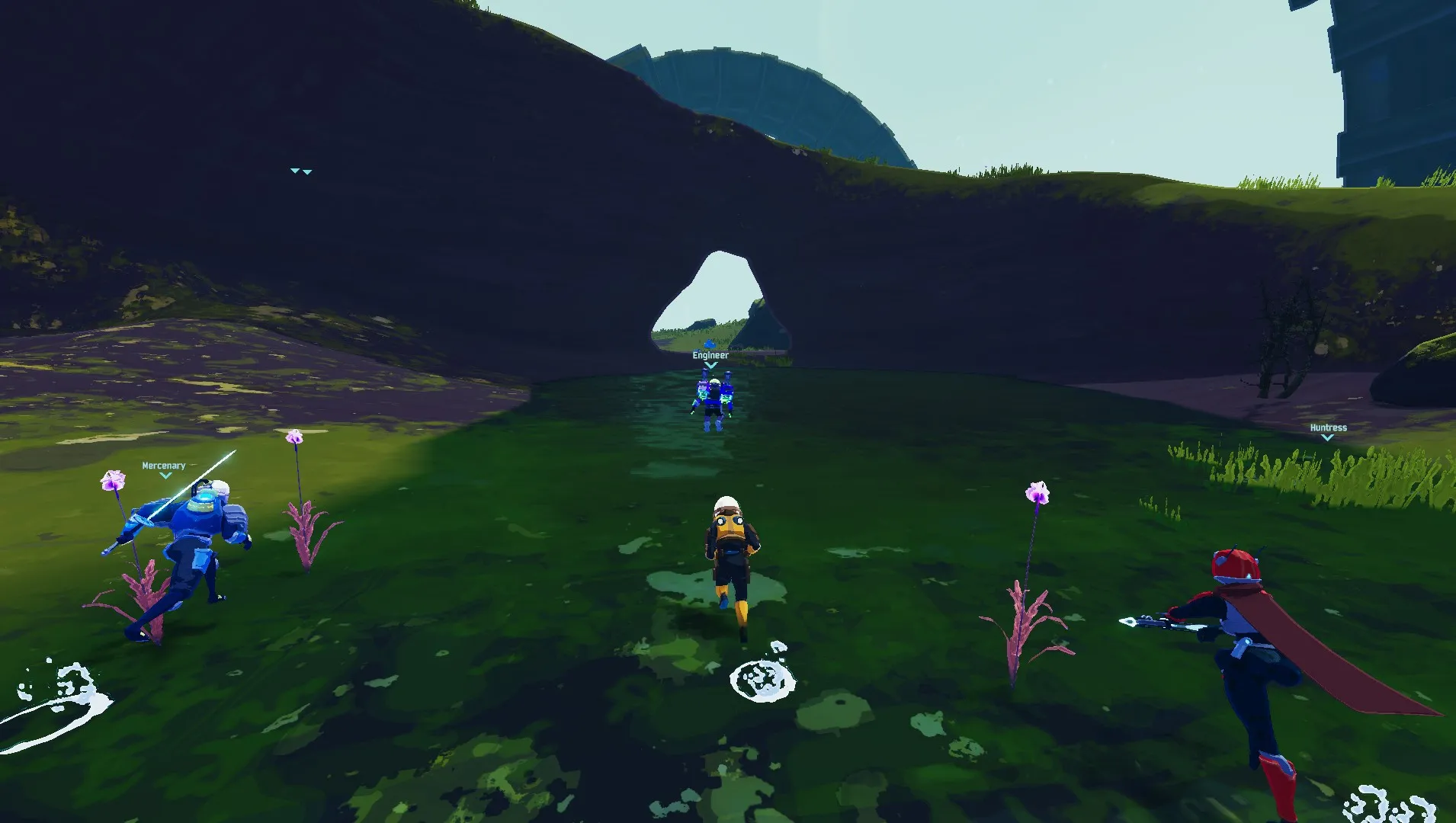
Each survivor offers a unique approach to combat and movement. Some excel at mobility, others at crowd control or burst damage. Choosing a survivor that matches your instincts improves consistency.
New players often perform best with survivors that offer mobility and forgiving kits, while advanced players may favor high-risk, high-reward characters.
Survivor selection tips:
- Prioritize mobility for early learning
- Learn one survivor deeply before switching
- Adjust item priorities per survivor
Mastery begins with familiarity.
Early Game Looting Strategy
The early game defines the trajectory of your entire run. Under-looting leaves you weak, while over-looting wastes precious time.
A practical approach is to grab most accessible chests, especially those near the teleporter, then move on. Perfection is unnecessary; momentum is critical.
Early-stage priorities:
- Loot efficiently, not exhaustively
- Activate the teleporter sooner rather than later
- Avoid chasing distant chests
Controlled looting keeps scaling manageable.
Combat Fundamentals and Positioning
Combat in Risk of Rain 2 is about movement, awareness, and threat prioritization. Standing still is almost always fatal.
Enemies scale in damage and health, making avoidance and positioning more important than raw damage output as runs progress.
Combat fundamentals:
- Keep moving at all times
- Focus high-threat enemies first
- Use terrain to break line of sight
Survival depends on motion.
Item Synergies and Build Fundamentals
Items define your power far more than your survivor choice. Understanding how items interact allows you to create exponential power growth.
Stacking synergistic items often outperforms collecting random upgrades. Some items shine early, while others scale brutally into late game.
Item strategy basics:
- Focus on damage, mobility, and survivability balance
- Avoid over-investing in one stat
- Learn which items scale best
Knowledge turns luck into consistency.
Managing Health, Healing, and Survivability
Damage becomes unavoidable in later stages, making healing mechanics essential. Relying solely on raw health rarely works.
Sustainable healing through items allows you to survive prolonged fights and unexpected bursts.
Survivability tips:
- Prioritize consistent healing sources
- Combine mobility with damage reduction
- Avoid face-tanking enemies
Staying alive enables scaling.
Teleporter Events and Boss Encounters
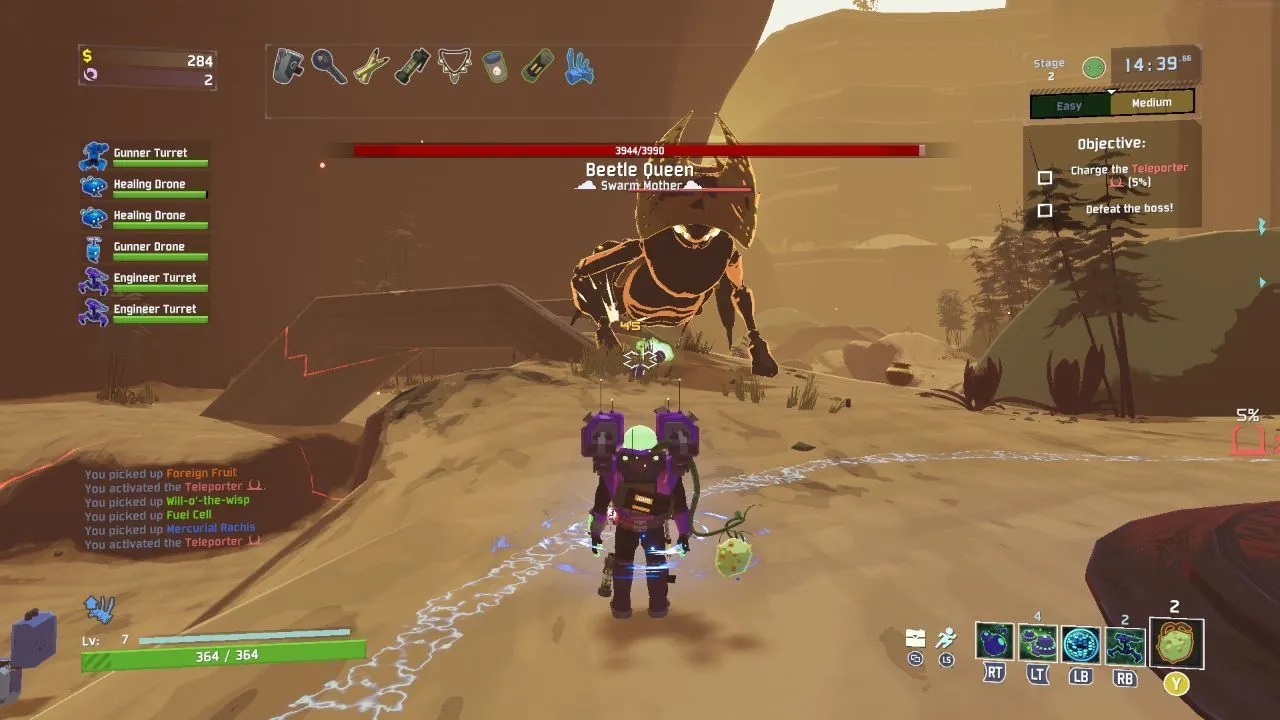
Teleporter events are the core challenge of each stage. Poor positioning or panic during these encounters often leads to death.
Understanding boss mechanics and controlling the battlefield improves success rates significantly.
Teleporter strategies:
- Clear surrounding enemies first
- Kite bosses within safe zones
- Use mobility to avoid burst damage
Control the fight, don’t rush it.
Equipment Usage and Active Item Timing
Equipment items provide powerful effects but require smart timing. Using them randomly wastes their potential.
Learning when to activate equipment can turn losing situations into recoveries.
Equipment usage tips:
- Save equipment for emergencies or bosses
- Sync equipment with item synergies
- Avoid activating during downtime
Timing defines impact.
Looping, Endgame Scaling, and Long Runs
Looping increases difficulty drastically, but also unlocks insane power potential. At this stage, mistakes become lethal.
Late-game success relies on awareness, clean movement, and efficient damage application.
Late-game strategies:
- Eliminate threats before they stack
- Maintain constant movement
- Avoid greedy decisions
Endgame mastery requires discipline.
Common Mistakes and How to Avoid Them
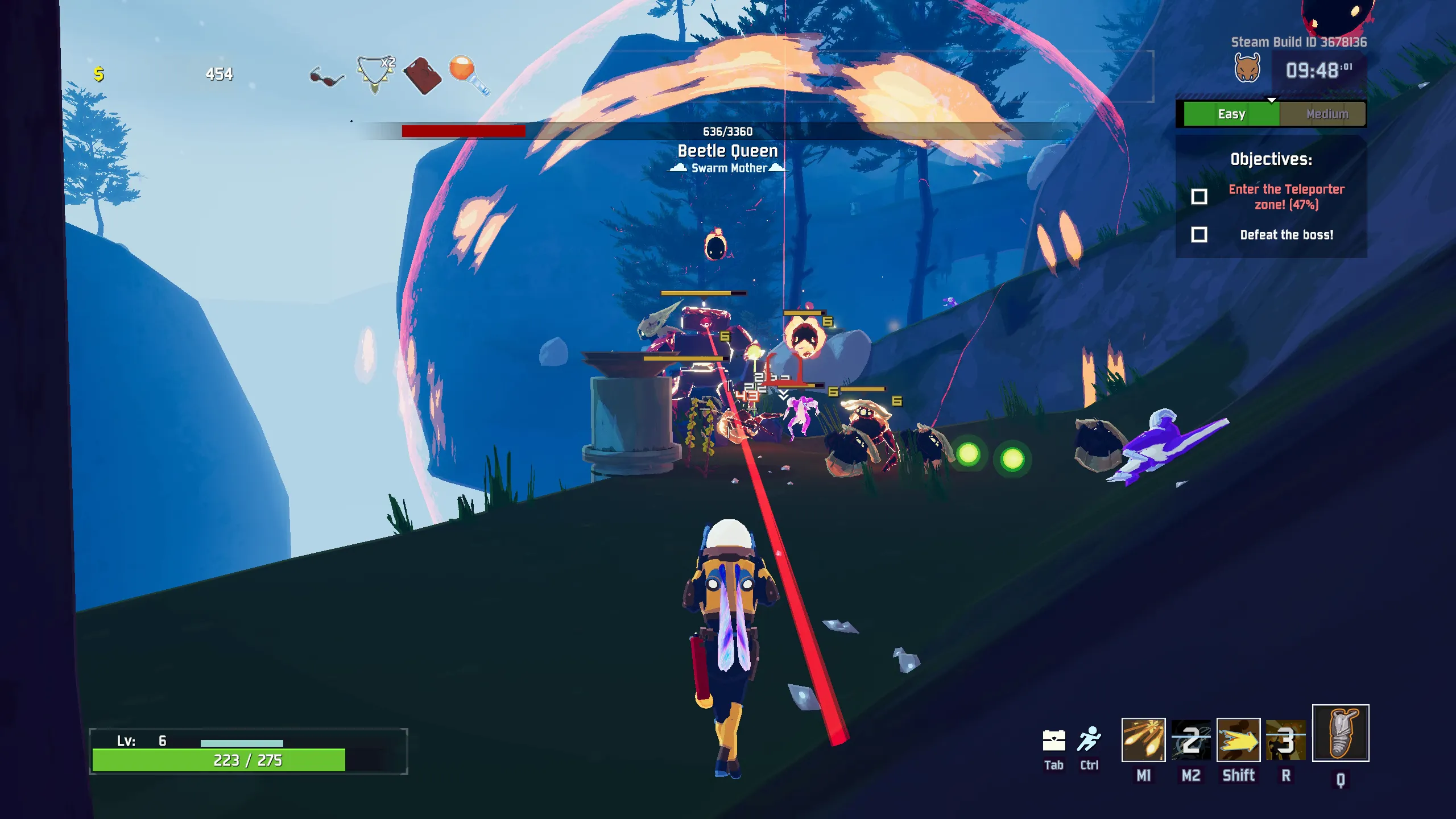
Most failures come from repeatable mistakes rather than bad luck. Recognizing these habits accelerates improvement.
Players often misjudge time, underestimate enemies, or ignore item synergy.
Mistakes to avoid:
- Over-looting early stages
- Standing still during fights
- Ignoring mobility items
Awareness corrects failure patterns.
Conclusion
Risk of Rain 2 is a game of momentum, knowledge, and controlled chaos. Mastery comes not from perfect aim, but from understanding how time, items, and movement interact. Every decision shapes the run, from early looting choices to late-game positioning.
By managing time efficiently, prioritizing item synergies, maintaining constant movement, and adapting to scaling difficulty, players can survive longer and experience the game’s most rewarding moments. In Risk of Rain 2, success belongs to those who move fast, think ahead, and never stop adapting.
160-character summary
Learn how to survive Risk of Rain 2 by mastering time management, item synergies, movement, and scaling strategies for longer, stronger runs.