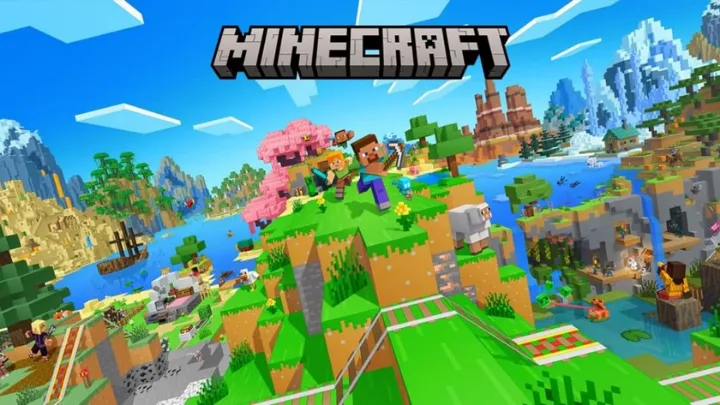
Minecraft has captured the imaginations of millions of players since its inception, offering a boundless sandbox where your only limit is your own creativity. However, for a newcomer, the initial experience can be daunting. You are dropped into a seemingly infinite world with no instructions, a rapidly setting sun, and lurking dangers waiting in the shadows. Knowing exactly how to progress from punching your first tree to defeating the Ender Dragon is crucial for a smooth and enjoyable gameplay experience. This comprehensive guide will walk you through the essential steps to survive, build, and eventually conquer the vast world of Minecraft.
Preparing for Your First Night
As soon as you spawn in a new world, the clock is ticking, and you have roughly ten minutes before the sun sets and the hostile mobs emerge. Your immediate priority is to gather resources and secure a safe place to weather the night. You should start by punching trees to collect wood, which is the foundational resource for all early-game tools.
Converting that wood into wooden planks and creating a crafting table will allow you to make a wooden pickaxe. With this pickaxe, you can mine a small amount of stone to upgrade your tools, making the process of gathering materials significantly faster. If you are lucky enough to find sheep, gather wool to build a bed, which allows you to skip the night entirely by sleeping through the darkness.
Gathering Essential Resources
Once you have survived the initial night, your next objective should be establishing a steady supply of essential resources. Iron is the most important early-to-mid-game material, allowing you to craft strong armor, buckets, and durable tools. You can find iron ore embedded in the stone walls of ravines or by mining relatively close to the surface.
Key Resources to Target
- Coal: Vital for smelting ores and lighting up your base to prevent mob spawns.
- Iron: The backbone of your early engineering, weaponization, and defense systems.
- Food sources: Such as cows, pigs, and sheep to maintain your health and stamina.
Gathering these resources efficiently will ensure that you do not run out of fuel or protection as you venture further away from your initial spawn point. Always remember to mark your path or create a trail of torches so you can find your way back to your main base.

Building Your First Shelter
A base is more than just a place to sleep; it is a central hub for your storage, crafting, and future technological advancements. Your first shelter does not need to be a grand mansion; a simple dirt hut, a wooden cabin, or a hollowed-out cave will do perfectly well. The primary function is to protect you from zombies, skeletons, and creeping spiders during the night.
Upgrading Your Shelter
- The Workshop: Place your chests, crafting table, and furnaces in an easily accessible layout.
- The Bedroom: Keep your bed safe and well-lit to prevent mobs from interrupting your rest.
- The Vault: Use double chests to organize your blocks, ores, and valuable items.
As your needs grow, you can slowly replace these temporary structures with more permanent, aesthetic, and functional buildings. Using stone bricks or wooden logs adds structural integrity and makes your base feel more like a home.
Exploring the Early Game Caves
Mining for deeper ores like gold and diamonds requires venturing into the dark and dangerous subterranean caverns of your world. Before heading deep underground, make sure you are well-equipped with an iron sword, a shield, and plenty of torches. Lighting up the environment is the most effective method to stop hostile creatures from spawning in your path.
Safety Rules for Caving
- Do not dig straight down: You might fall into a pool of lava or an immense chasm.
- Keep the right hand wall: If you get lost, following one wall will eventually lead you out of most cave systems.
- Bring a water bucket: This is a lifesaver for surviving falls or neutralizing lava.
Venturing into the depths brings an adrenaline rush, but it also yields significant rewards. Diamond ores typically appear at the lowest levels of the world, making careful and methodical exploration the key to success.
Setting up Your First Farm
Relying solely on hunting wildlife or gathering apples will eventually lead to starvation when you explore distant biomes. Establishing a reliable food source is one of the most critical steps in becoming self-sufficient. To start, you will need to craft a hoe, find a water source, and till the dirt or grass adjacent to it to create hydrated farmland.
Best Crops for Beginners
- Wheat: Easy to find from breaking grass and great for bread.
- Carrots and Potatoes: Provide excellent nutrition and drop in large quantities.
- Pumpkins and Melons: Useful for trading with villagers later in the game.
By building an enclosed area for your farm and lighting it up, you protect your crops from being trampled by wandering mobs. Soon, you will have more food than you can possibly consume.
Creating a Nether Portal
Once you feel comfortable in the overworld, it is time to travel to the Nether, a hellish dimension filled with unique resources and dangerous foes. To construct a portal, you need to arrange fourteen obsidian blocks in a rectangular frame and light the interior using flint and steel. Obsidian can be mined with a diamond pickaxe or created when water flows onto a lava source block.
The Nether serves as a massive shortcut for traveling thousands of blocks in the real world, as one block in the Nether equals eight blocks in the Overworld. Additionally, it is the only place where you can gather materials necessary to brew potions and challenge the game's ultimate boss.
Dangers of the Nether
- Ghasts: Giant, floating jellyfish that shoot explosive fireballs.
- Piglin Brutes: Aggressive, gold-loving brutes that hit incredibly hard.
- Lava Oceans: A single wrong step can result in the loss of all your hard-earned gear.
Enchanting and Upgrading Gear
When you are ready to explore the far reaches of the game, normal iron or diamond gear will not suffice against the strongest enemies. Enchanting your tools, weapons, and armor gives you massive advantages, from dealing extra damage to allowing your armor to absorb more incoming damage.
Essential Enchantments
- Unbreaking: Increases the durability of your gear.
- Mending: Repairs your equipment using the experience orbs you collect.
- Fortune: Increases the yield of valuable ores when mining.
To start enchanting, you will need to build an enchanting table using diamonds, obsidian, and a book. Surrounding the table with bookshelves increases its enchanting power, allowing you to unlock higher-level enchantments.
Defeating the Ender Dragon
The ultimate goal of the core Minecraft story mode is to find the Stronghold, activate the End Portal, and defeat the Ender Dragon. The Stronghold can be located by throwing Eye of Ender items, which float in the direction of the portal. Once you enter the End dimension, you will find yourself on a lonely obsidian platform surrounded by massive obsidian pillars.
Dragon Fighting Strategy
First, destroy the End Crystals located on top of the obsidian pillars using a bow and arrow or by climbing up and breaking them. If you do not destroy them, the dragon will heal whenever it flies near them.
Dodging the Dragon
After the crystals are destroyed, wait for the dragon to perch on the central platform. This is your chance to deal heavy melee damage. Be sure to avoid the dragon's breath attacks and its sweeping charges, as they can knock you off the island.
Exploring the Outer End Islands
Defeating the Ender Dragon triggers a spectacular death animation and spawns a small portal that leads back to your world, but it also generates an End Gateway. This gateway allows you to teleport to the outer islands of the End dimension, where the game's most coveted loot is hidden.
On these outer islands, you will find large cities built out of purpur blocks, known as End Cities. Exploring these structures rewards you with Elytra—a pair of wings that allows you to glide and fly through the air when combined with fireworks.
The Shulker Threat
- Shulker attacks: Shulkers are block-like mobs that fire projectiles causing the levitation effect.
- Loot hunting: Defeating them grants shulker boxes, which act as portable chests.
Mastering Automation with Redstone
After conquering the end-game challenges, you can begin to focus on building complex contraptions using Redstone dust and circuitry. Redstone allows you to automate repetitive tasks like harvesting crops, smelting ores, sorting items, and defending your base from intruders.
Intermediate Redstone Components
- Repeaters: Delay or lock the Redstone signal.
- Observers: Detect block updates and send a pulse.
- Hoppers: Move items between containers and chests automatically.
Learning the basics of Redstone engineering opens up an entirely new layer of gameplay, turning Minecraft from a simple survival game into an industrial sandbox.

Conclusion
Mastering Minecraft takes time, patience, and a willingness to explore every dimension the game has to offer. From surviving your very first night in a small dirt hut to building massive automated contraptions and flying across the world with Elytra, the journey is entirely yours to shape. By following this guide, you are well on your way to becoming a skilled player capable of overcoming any obstacle in the game.