.webp)




Foundation stands apart from traditional city-building games because it abandons grids entirely. Instead, it embraces an organic construction system where buildings, paths, workplaces, and residential areas emerge naturally from villager behavior. But as beautiful and unique as this system is, it also introduces one major challenge that every player eventually encounters: uncontrolled urban sprawl.
This review takes a deep, analytical look at that specific issue—how the game’s most innovative mechanic can become its biggest obstacle—and explores what it feels like to manage a medieval settlement that grows in ways you cannot always predict.
1. First Impressions of Foundation’s Organic Design
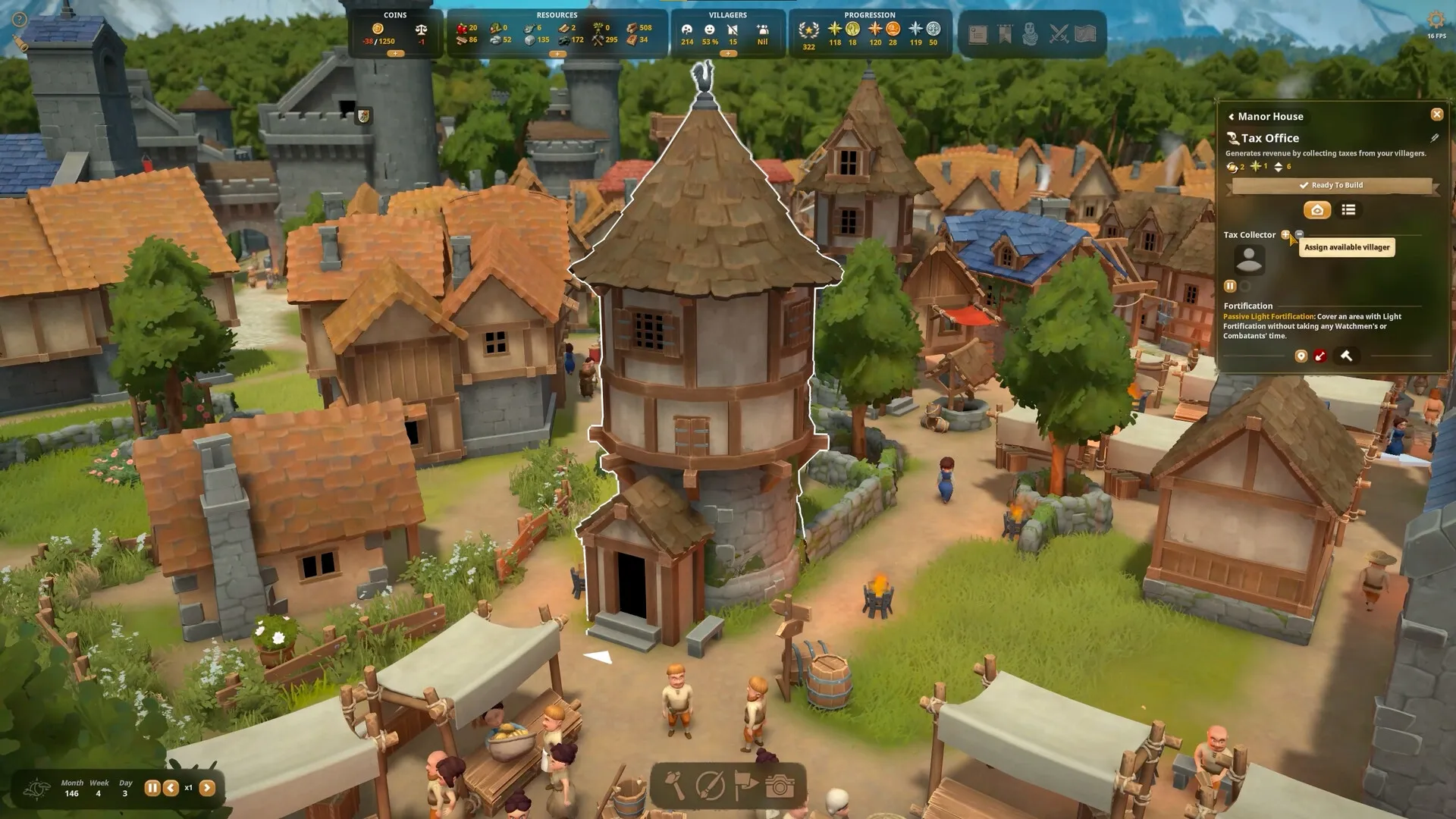
The first hour with Foundation is enchanting. Buildings curve along the terrain, villagers trace natural paths through forests and farmlands, and your settlement blossoms like a living organism. There is a sense of freedom absent in traditional grid-based strategy games.
As you place workplaces and zones, the village seems to take on a life of its own. Newcomers arrive, homes pop up where villagers desire them, and paths emerge from months of foot traffic. The result feels alive, organic, and authentic to a pre-planned medieval town.
However, beneath this beauty lies a ticking time bomb. Without strict controls, the same organic growth that creates charm will eventually create chaos.
2. When Beauty Becomes a Burden: The Moment Sprawl Begins
The turning point usually arrives around 60–100 villagers. That’s when homes begin spreading more aggressively, far from workplaces, markets, or water sources. Villagers act based on their own priorities, and their decisions often conflict with efficient planning.
You start noticing villagers making long daily commutes across the entire map only to reach a workplace you placed nearby. The organically drawn paths begin to overlap and tangle, forming unintentional “desire lines” leading to inefficiency.
Suddenly, the charming freedom transforms into anarchy—an issue unique to Foundation’s design philosophy.
3. Understanding the Root Cause: Villager AI Independence
One of the most fascinating but challenging aspects of Foundation is the autonomy of villagers. They are not static drones assigned to buildings—they behave according to a complex hierarchy of needs.
Villagers choose their own homes
They relocate themselves when dissatisfied. They choose work locations, markets, and workplaces based on proximity only after a home is placed.
Homes appear where they want, not where you think they should
This freedom leads to unpredictable clustering and neighborhoods that might not fit your long-term vision.
This is the heart of the sprawl issue: the very AI system that gives Foundation its charm also removes absolute control.
4. The Market Radius Problem and Resource Fragmentation
Markets in Foundation function as resource hubs, but they have limited radius of influence. When homes are scattered too far away, villagers cannot access a market efficiently—even if it supplies everything they need.
This leads to major pathing congestion, resource starvation, and random productivity drops. Far-flung households create micro-economies that collapse because markets cannot support them.
Resource fragmentation soon follows. Production buildings built for one neighborhood must support a population now living miles away.
This snowball effect becomes one of the biggest difficulties for mid-game settlements.
5. The Housing Zone Dilemma: Control vs Freedom
Foundation gives players the option to control where homes can appear using zoning tools. However, even with housing zones, players often underestimate how quickly residential areas expand.
The real issue is that villagers do not only build within designated zones—they prefer zones near workplaces, resources, and terrain they deem suitable. If these areas overlap poorly, chaos follows.
The dilemma
Do you restrict zones harshly to avoid sprawl, or do you allow freedom at the risk of losing structure?
The consequences of restriction
Tightly restricted zones slow growth but preserve order.
The consequences of freedom
Unrestricted zones create lively but unsustainable residential explosions.
Balancing this dichotomy is one of the game’s deepest strategic challenges.
6. Transportation, Walk Cycles, and Time Loss
Because villagers walk everywhere, distance becomes the most important resource in Foundation. Unlike other city-builders, there are no carriages, horses, or fast-travel systems. Every step counts.
As cities expand chaotically, villagers waste huge chunks of time commuting. Builders walk from distant farmlands to the complete opposite end of the map just to construct a house. Transporters carrying goods take winding paths because the layout has lost cohesion.
This creates a compounding productivity issue: the bigger the sprawl, the worse every system performs.
7. Monument Placement and the Domino Effect
Monuments are some of Foundation’s most visually stunning features, but they also deeply impact housing expansion. A poorly placed monument does more than block terrain—it forces villagers to reroute paths, encourages housing clusters in awkward corners, and sometimes blocks entire regions from proper development.
Monument-induced fractures
A large church or keep can unintentionally divide a town in two, creating economic “islands.”
The domino effect
Once one area becomes inefficient, villagers migrate, creating new residential pressure elsewhere, spreading the sprawl problem further.
This is a prime example of how Foundation’s freedom requires long-term foresight.
8. Managing Sprawl Through Zoning and Urban Planning
Through trial, error, and plenty of failed medieval towns, players discover several effective strategies to combat sprawl. Though the game explains little, experienced players develop their own systems for structured organic growth.
Recommended planning techniques
- Use multiple small markets instead of one large market
- Create layered residential zones (core → mid → rural)
- Restrict housing near industrial zones
- Use decorative fences to subtly “guide” villagers
- Create natural town boundaries using water or forests
Soft control is more effective than hard control
Instead of forcing villagers into rigid grids, shaping their environment leads to healthier development patterns.
This mix of influence and acceptance is the philosophy that makes Foundation unique.
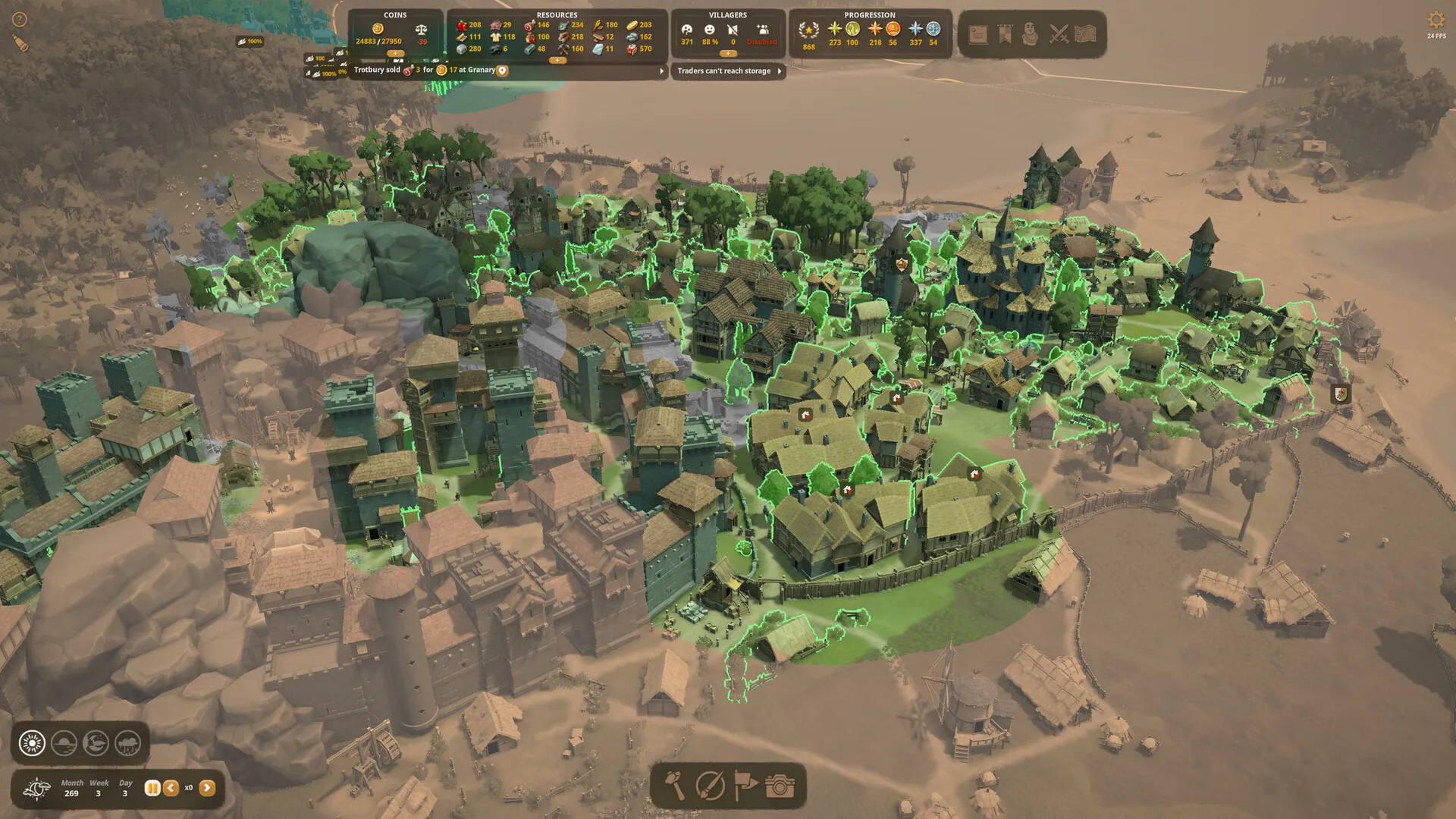
9. Late-Game Consequences: When Sprawl Becomes a Monster
At high population counts—200 villagers and above—sprawl becomes a critical gameplay factor. Even the most disciplined city planners encounter neighborhoods that grow beyond intended boundaries.
Late-game symptoms include:
- severe resource shortages due to inefficient distribution
- long construction times
- overworked transporters
- neighborhoods with no market access
- villagers constantly switching homes and jobs
- pathing loops where villagers wander aimlessly
These issues can freeze a settlement’s momentum or even cause collapse.
Why it happens
Foundation simulates a real medieval town, and real towns are chaotic.
The result
A living world where beauty comes at the price of control.
This conflict forms the core identity of Foundation.
10. Final Thoughts on Embracing Imperfection
Ultimately, Foundation asks players to accept imperfection. This game is at its best when you stop trying to control every detail and instead collaborate with the villagers and the landscape.
Uncontrolled growth is not a flaw—it is part of the experience. It forces you to adapt, rethink, redesign, and occasionally embrace the messy beauty of an evolving medieval society.
The challenge of sprawl teaches patience and strategic foresight. And even when a village becomes unruly, it remains breathtaking to watch—the winding roads, clustered homes, and bustling markets combine into a visual symphony of life.
Foundation is not about building the perfect city. It is about guiding a living world that rewrites itself with every decision you make.
The organic growth system of Foundation is its most defining feature, but also its most complex challenge. Uncontrolled housing expansion, villager autonomy, pathing inefficiency, and resource fragmentation all stem from the same innovative design choice. Yet despite their difficulties, they make Foundation one of the most immersive, emotionally resonant, and artistically beautiful city-builders ever created. To play Foundation is to negotiate with chaos—and to find beauty in what grows beyond your control.