.webp)
The Technical Evolution of Input Mapping and Latency Resolution in Bongo Cat Interactive Platforms
Introduction to the Bongo Cat Phenomenon
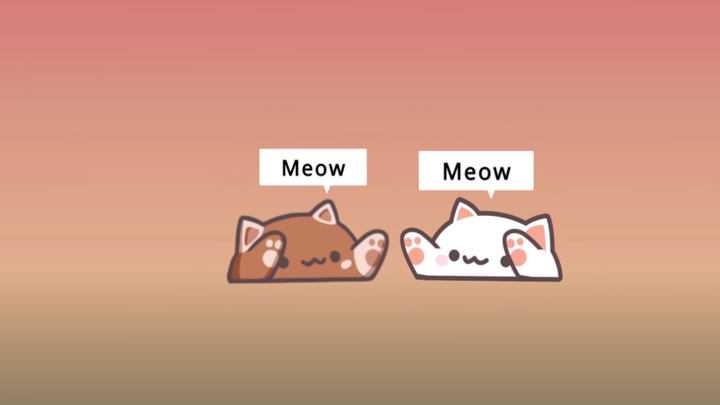
While the broader internet remembers Bongo Cat as a fleeting endearing animation of a feline rapidly patting a pair of bongos the digital development community recognizes it as something far more complex. Beneath the surface of this viral sensation lies a fascinating highly specific technical case study regarding web based input mapping browser latency and the limitations of modern hardware. When developers attempted to transform a static video meme into an interactive playable digital instrument they encountered a myriad of hidden hurdles. The seamless experience of pressing a physical key and hearing a digital bongo strike simultaneously is heavily dependent on overcoming Javascript event loop bottlenecks keyboard ghosting and audio buffering delays.
This article bypasses the general cultural impact of the meme to dive deeply into the specific engineering crisis of input to audio synchronization. By examining the chronological evolution of Bongo Cat web applications and desktop overlays we can observe a microcosm of modern web audio development. From the earliest rudimentary browser adaptations to the highly optimized zero latency virtual instruments used by rhythm gamers today the journey of Bongo Cat exposes the fragile bridge between human rhythmic intention and digital execution. The relentless pursuit to make the cat play in perfect time is a testament to the complexities of interactive design.
The Genesis of the Meme and the Demand for Interactivity
The Visual Foundation in Late 2018
The origins of the Bongo Cat phenomenon trace back to early September 2018 when a simple two frame animated image captured the attention of social media users worldwide. The original animation featured minimal line art prioritizing charm over technical complexity. However as users began meticulously editing the animation to align with popular musical tracks a distinct psychological shift occurred within the audience. Viewers no longer wanted to passively consume pre rendered videos of the cat playing songs they developed a strong desire to actively participate in the creation process. This demand marked the beginning of a rapid shift from visual gag to interactive application presenting a unique set of challenges for amateur developers looking to capitalize on the trend.
The Push for User Control
As the demand for interactivity grew early web developers rushed to create browser based versions where users could strike the bongos themselves. The conceptual design was straightforward mapping the left and right bongo strikes to the A and D keys on a standard computer keyboard. However the execution was immediately plagued by the reality of web browser architecture. Early iterations were cobbled together in a matter of hours utilizing basic HTML and Javascript without any regard for optimization. Users who attempted to play along to their favorite songs quickly realized that their rhythmic inputs were not translating accurately to the screen leading to a frustrating disconnect between user intention and digital output.
The Initial Input Disconnect
This disconnect highlighted a fundamental flaw in how early developers approached the interactive Bongo Cat project. They treated the application as a visual novelty rather than a functional musical instrument. The code prioritized displaying the animation frames over accurately capturing the precise millisecond a key was pressed. As a result the earliest interactive versions of the meme were virtually unplayable for anyone with a sense of rhythm. This initial failure set the stage for a prolonged technical evolution forcing developers to look beyond basic scripting and dive into the deeper mechanics of browser performance and peripheral hardware processing.
Early Browser Adaptations and the Polling Rate Problem
Javascript Event Loop Bottlenecks
By late 2018 the most prominent iteration of the interactive meme was the website bongo cat which attempted to centralize the experience. The primary technical hurdle faced by this platform was the reliance on standard Javascript event listeners specifically the keydown and keyup events. Browsers handle these events through a single threaded event loop meaning that if the browser was busy rendering an animation or processing another script the registration of the keyboard input would be delayed. For a standard webpage a delay of a few milliseconds is imperceptible but for a rhythm based application masquerading as a musical instrument even a fifteen millisecond delay completely destroys the user experience.
The Limitations of Standard Input Polling
The problem was exacerbated by the standard polling rates of commercial keyboards and how operating systems pass this data to the web browser. Most non gaming keyboards poll inputs at a relatively low frequency. When combined with the browser processing time the total input lag from the moment the user depressed the plastic key to the moment the Javascript function fired was highly variable. This jitter meant that a user attempting to play a steady beat at one hundred and twenty beats per minute would find the digital bongo strikes landing slightly ahead or slightly behind the actual beat creating a muddy chaotic sound profile that frustrated dedicated users.
Attempts at Early Optimization
Early attempts to optimize this polling rate problem involved streamlining the main thread execution. Developers stripped away unnecessary background scripts and minimized Document Object Model manipulation during keystrokes. Instead of updating the entire webpage when a key was pressed the scripts were optimized to only target the specific image source of the cat paw. While these micro optimizations slightly reduced the overall input lag they could not fully overcome the inherent limitations of the Javascript event loop. The community realized that achieving true zero latency would require abandoning traditional web development practices in favor of more advanced audio focused programming interfaces.
Transitioning from Visual Gag to Rhythmic Tool
The High Beats Per Minute Synchronization Crisis
Entering early 2019 the user base of interactive Bongo Cat applications shifted from casual internet browsers to dedicated rhythm gamers and amateur musicians. These users began attempting incredibly complex musical arrangements pushing the digital instrument to its absolute limits. Songs like DragonForce tracks or rapid fire electronic dance music required players to strike the keys at speeds exceeding ten times per second. It was during these high stress tests that the synchronization crisis truly manifested. The visual animation of the cat paw slapping the bongo simply could not keep up with the physical inputs resulting in a visual tearing effect where the animation would skip frames or freeze entirely while the audio struggled to catch up.
Prioritizing Audio Over Visuals
Faced with this synchronization crisis developers had to make a critical design decision. They realized that in a musical application the audio feedback is vastly more important than the visual feedback. If the animation lags but the sound plays exactly on time the user can still maintain their rhythm. Conversely if the animation is perfect but the sound is delayed the user will instinctively adjust their playing and ruin the performance. Consequently the architecture of Bongo Cat platforms was fundamentally restructured to decouple the audio processing thread from the visual rendering thread. The keystroke inputs were routed directly to the audio triggers first ensuring that the bongo sound played instantly while the visual update was treated as a secondary non blocking process.
The Psychological Impact of Synchronization
This decoupling strategy profoundly improved the playability of the interactive toy highlighting a fascinating aspect of human psychology in game design. Users reported that the game felt significantly more responsive and accurate even though the visual animation was technically still dropping frames during rapid inputs. By prioritizing the auditory feedback loop developers successfully tricked the human brain into perceiving a perfectly synchronized system. This phase of development cemented the idea that Bongo Cat was no longer just a visual joke to be looked at but a genuine albeit simplistic rhythmic tool that required careful respect for human sensory processing times.
The Challenge of Ghosting and Keyboard Rollover
Hardware Limitations Intersecting Web Design
As 2019 progressed the scope of Bongo Cat expanded beyond the simple two bongo setup. Developers began adding multiple instruments to the interface including cymbals tambourines marimbas and eventually full piano keyboards. This expansion required users to map multiple keys across their physical keyboards to trigger different sounds. Immediately a severe hardware limitation became apparent. The vast majority of standard membrane office keyboards suffer from a phenomenon known as keyboard ghosting or lack of N key rollover. When a user pressed three or four keys simultaneously to play a chord on the digital marimba the physical keyboard matrix could not process all the inputs causing some keystrokes to be completely ignored by the computer.
The Polyphonic Ceiling
This hardware limitation created a frustrating polyphonic ceiling for ambitious Bongo Cat musicians. A player might execute a perfect four note chord on their keyboard but the web application would only register and play two notes. Initially many users blamed the web developers assuming the Javascript code was buggy or dropping inputs. It took significant community education via forums and social media to explain that the issue was deeply rooted in the physical circuitry of their keyboards. This intersection of web application design and peripheral hardware limitations demonstrated that browser based instruments are entirely at the mercy of the user physical setup a variable that web developers simply cannot control.
Community Workarounds and Mapping Strategies
To mitigate the ghosting issue without demanding that users purchase expensive mechanical gaming keyboards with full anti ghosting capabilities developers had to rethink their default input mappings.
List of Key Mapping Strategies
Number 1 Developers spread the default key bindings across different columns and rows of the keyboard matrix avoiding adjacent keys that frequently share the same physical circuit pathway.
Number 2 The introduction of customizable key mapping allowed users to test their own keyboards and find specific key combinations that bypassed their localized hardware ghosting zones.
Number 3 The implementation of single key chord macros where pressing one button would trigger multiple audio files simultaneously allowing users with limited hardware to still produce rich layered sounds.
Audio Application Programming Interface Integration
Overcoming Hypertext Markup Language Audio Stacking
Late 2019 and early 2020 saw the most significant technical leap in the evolution of Bongo Cat platforms replacing rudimentary audio implementation with advanced browser standards. Originally web based versions used standard audio tags to play the bongo sounds. This approach was disastrous for rapid repetitive inputs. When a user pressed a key rapidly the browser would attempt to pause rewind and replay the same audio file. This caused massive audio clipping unnatural stuttering and severe delays as the browser engine struggled to handle multiple rapid requests to read the file from the disk cache.
The Implementation of the Web Audio Interface
To solve the audio stacking crisis developers migrated the entire sound engine to the Web Audio Application Programming Interface. This powerful system allowed developers to load the bongo piano and cymbal sound files directly into the active memory buffer of the browser as raw audio data. When a user pressed a key the application no longer interacted with the Document Object Model to manipulate an audio tag. Instead it instantly generated a new audio source node directly from the memory buffer routing it to the destination speakers in a fraction of a millisecond. This transition revolutionized the platform allowing for true polyphony and completely eliminating the audio stuttering that had plagued earlier versions.
Achieving Zero Latency Illusions
The interation of advanced audio buffers finally allowed Bongo Cat to function as a viable digital instrument. By utilizing memory based audio playback multiple instances of the exact same sound could overlap naturally perfectly mimicking the acoustic properties of striking a real bongo drum repeatedly while the previous sound was still resonating. This technical overhaul proved that web browsers were capable of handling low latency audio processing provided the developers bypassed standard web design paradigms and utilized lower level programming interfaces designed specifically for real time audio manipulation.
Expanding the Arsenal From Bongos to Full Keyboards
The Physical Mapping Dilemma
By 2020 the ambition of the Bongo Cat community led to the integration of complex instruments most notably a full synthesizer and piano. This presented a severe user interface and input mapping dilemma. A standard piano possesses eighty eight keys while a standard computer keyboard only has around one hundred and four keys many of which are designated for system functions. Mapping a linear piano scale onto the staggered diagonal rows of a QWERTY layout required immense creative problem solving. The challenge was to create a mapping system that was both intuitive enough for beginners to understand and logically structured enough for musicians to play complex melodies without looking at their hands.
Ergonomics of Virtual Web Instruments
Developers experimented with several layout philosophies. Some attempted a literal linear mapping placing the lowest notes on the bottom row of keys and the highest notes on the top row. However this proved ergonomically disastrous as playing standard chords required unnatural finger contortions. Ultimately the community settled on a split keyboard design where the middle rows served as the white keys of the piano and the upper row served as the black keys effectively turning the computer keyboard into a miniature compressed synthesizer layout. This ergonomic optimization was crucial as it allowed users to build muscle memory and transition their physical keyboard skills into the digital environment of the web application.
Managing Asset Loading and Memory Overhead
With the addition of dozens of new sound files for each new instrument the memory footprint of the Bongo Cat web applications expanded rapidly. Developers now faced the issue of asset management. Loading high fidelity audio samples for every key of a piano upon opening the webpage would cause massive initial loading times and potential memory crashes on lower end devices. To combat this lazy loading techniques were implemented. Only the essential bongo sounds were loaded immediately while the larger piano and marimba sound banks were fetched and buffered in the background only when the user explicitly navigated to those specific instrument modes.
The Rise of Custom Macros and Third Party Keymappers
External Software Interventions
Moving into 2021 the hardcore faction of the Bongo Cat community grew dissatisfied with the limitations of browser based input interpretation. Even with optimized key mappings executing rapid trills or complex rhythmic patterns on a standard keyboard was physically exhausting and prone to human error. To achieve perfect performances for their viral videos players began utilizing external macro software and third party keymapping tools. Programs that allowed users to record sequences of keystrokes and bind them to a single button press became incredibly popular. This marked a shift where the web application was no longer just an instrument but a canvas for external software manipulation.
The Automation Controversy
The rise of macros introduced a philosophical debate within the community regarding the authenticity of Bongo Cat performances. When a user posted a video playing an impossibly fast flawless rendition of a classical music piece purists argued that using automated scripts defeated the entire purpose of the interactive toy. Conversely the technical community viewed it as a fascinating exercise in scripting and automation writing complex code to force the digital cat to perform at superhuman speeds. This debate highlighted the tension between the organic clumsy charm of the original meme and the clinical precision of automated digital inputs.
Integrating Controller Support
To bridge the gap between keyboard limitations and software automation developers began experimenting with alternate input methods. Through modern browser application interfaces some versions of Bongo Cat implemented support for Musical Instrument Digital Interface controllers and standard gaming gamepads. Allowing a user to plug in a physical electronic piano keyboard and have the web browser translate those specific digital interface signals into the visual animation of the bongo cat was a monumental achievement. It completely bypassed the physical limitations of the computer keyboard providing professional grade input precision and pressure sensitivity to an application that started as a simplistic internet joke.
Community Driven Interface Refinements and Visual Feedback
Frame Pacing and Animation Synchronization
Throughout 2022 attention returned to the visual aspect of the application. While the audio was now highly optimized and virtually latency free the visual animation of the cat paw required refinement. The original animation relied on instantly swapping out static images when a key was pressed. At high speeds this resulted in a jarring strobe light effect that was visually fatiguing. Developers realized that to make the experience feel truly cohesive they needed to implement frame pacing and animation interpolation. By adding micro transitional frames that smoothed the movement of the paw between resting and striking the visual feedback felt significantly more natural and grounded.
Dynamic Visual Responsiveness
To further enhance the feeling of interactivity community developers began adding dynamic visual elements tied directly to input intensity. While traditional computer keyboards lack pressure sensitivity developers used the speed of repeated inputs to approximate intensity. If a user mashed a key rapidly the visual animation would respond by displaying screen shake effects sweat drops on the cat character or dynamic lighting changes. This responsive visual design served a crucial purpose. It provided immediate satisfying feedback to the user masking any residual micro latency and making the act of pressing a plastic key feel incredibly impactful and deeply connected to the digital environment.
Customization and User Generated Content
The optimization of the underlying engine allowed developers to open up the visual interface for user customization. Because the audio and input parsing were now robust and separate from the visual rendering users could easily inject their own artwork without breaking the timing of the application. This led to a massive resurgence in popularity as users created custom skins representing their favorite characters stream avatars or personal pets. The ability to modify the visual presentation while relying on a rock solid highly optimized low latency input engine solidified Bongo Cat as a versatile enduring platform rather than a disposable meme.
Mobile Portability Versus Desktop Precision
The Touch Event Latency Hurdle
As internet traffic heavily shifted toward mobile devices in 2023 migrating the interactive Bongo Cat experience to smartphones presented a massive new set of technical issues. Mobile web browsers historically implemented a three hundred millisecond delay on all click events. This delay was built into the operating system to determine if the user was simply tapping the screen or attempting to double tap to zoom in on the page. For a rhythm game a guaranteed three hundred millisecond delay rendered the application entirely unplayable. Mobile users tapping the screen found that the sound and animation triggered nearly a third of a second later completely destroying any sense of musical timing.
Bypassing Mobile Browser Limitations
To salvage the mobile experience developers had to completely rewrite the input handling logic specifically for touchscreen devices. They abandoned traditional click event listeners entirely and implemented raw touch start and touch end application interfaces. By pairing these raw touch events with specific styling commands that disabled the default browser zoom and scrolling behaviors developers successfully bypassed the operating system delay. This brute force optimization allowed mobile browsers to register taps instantly bringing the responsiveness of the mobile web version almost on par with the optimized desktop keyboard experience.
Screen Real Estate and Interface Design
Even with the latency resolved mobile platforms struggled with physical screen real estate. Displaying a full piano keyboard or a complex drum kit on a six inch glass screen meant the hitboxes for individual notes were incredibly small. Without the tactile feedback of physical keyboard keys mobile users frequently missed their intended notes. Developers had to compromise creating simplified modular interfaces for mobile users. Instead of displaying all instruments at once mobile versions utilized swipe gestures to switch between simplified two or four button layouts. This compromise prioritized accuracy and playability over the complex polyphony available to desktop users highlighting the stark divide between mobile and desktop interaction paradigms.
The Modern State of Bongo Cat A Standardized Virtual Instrument
Beyond the Browser Environment
Today the technical legacy of the Bongo Cat input mapping struggle exists largely outside the confines of the standard web browser. While optimized web versions still exist for casual play the most dedicated users have migrated to standalone executable programs and integrated overlays. The community recognized that to achieve absolute zero latency and utilize advanced hardware features they had to escape the inherent sandbox limitations of web browsers. Modern Bongo Cat applications are written in lower level languages like C plus plus operating directly with the computer operating system to read raw keyboard and mouse inputs before they are even processed by other applications.
Integration into Streaming and Rhythm Gaming
This raw input processing has allowed Bongo Cat to become a standard tool in the digital broadcasting and rhythm gaming communities. Popular rhythm games like osu heavily utilize Bongo Cat overlays where the cat perfectly mimics the lightning fast keyboard and mouse movements of professional players in real time. Virtual YouTubers utilize similar technology mapping their precise peripheral inputs to animated avatars to provide engaging visual feedback to their audiences. The technology driving these seamless zero latency overlays is a direct descendant of the early frustrating struggles to make a simple web animation trigger on time.
Conclusion on the Evolution of Digital Input
The transformation of Bongo Cat from a static drawing into a highly responsive customizable digital instrument is a compelling narrative about the challenges of web development and input mapping. What began as a community frustrated by audio stuttering and input lag evolved into a masterclass in utilizing advanced application interfaces bypassing hardware limitations and understanding the psychology of audio visual synchronization. The exhaustive technical iterations required to make a digital cat hit a bongo drum exactly on the beat serve as a permanent reminder of the immense unseen complexity required to create simple seamless digital experiences.